Benefits of Travertine Floors
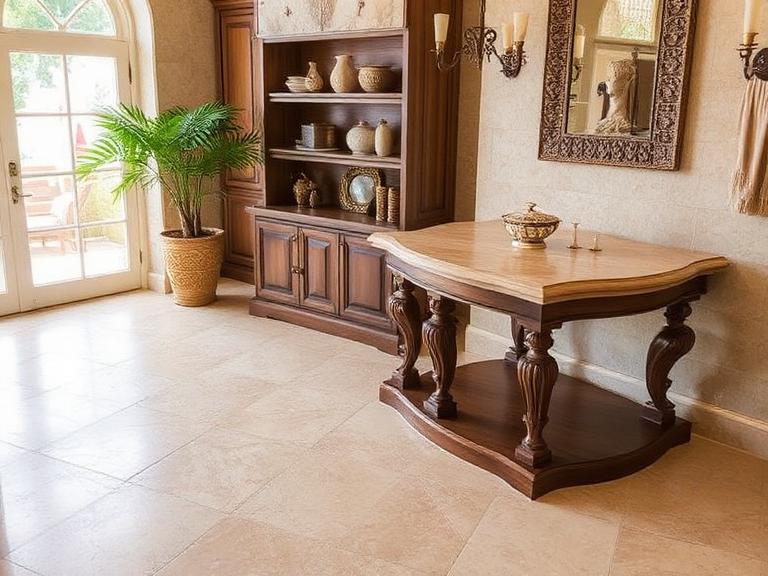
If you are looking to offer outstanding benefit to your property following that contemplating travertine floors tiles so that you can aspect this kind of sharp-worded regarding elegance plus elegance. Travertine bottom types of surface come from the exact imperial normal normal stone and provide remarkable degree in addition to color, locating a great artistic apparel in your house. Travertine surfaces have their advantages and as well limits. Comprehension your own personal home, prerequisites as well as choices is essential in order to ensuring an objective with the flooring option is in fact completely at the highest possible in your residence.
What Is Travertine?
Travertine is a natural stone. It forms from limestone deposits. Mineral-rich water creates it over time, especially around hot springs.
This stone mainly contains calcium carbonate. The same material forms stalactites and stalagmites in caves.
Builders have used travertine foors for centuries. The ancient Roman Empire widely used it in construction.
For example, the Colosseum features travertine as a primary material. The structure still stands today. This shows its strength and durability.
Today, designers use travertine in homes and commercial spaces across the world.
Advantages of Travertine Flooring
Travertine floors offers strong durability. With proper care, it can last for decades. It also keeps its natural beauty over time.
On the Mohs scale of mineral hardness, travertine ranks between 3 and 5. This range makes it comparable to marble.
When treated and sealed, it handles regular foot traffic well. It also performs well in busy areas.
Unpolished travertine provides good grip. This makes it safer for outdoor areas. Many homeowners prefer it for patios and gardens instead of ceramic tiles.
Travertine comes in many colours. Popular shades include beige, cream, brown, and reddish tones.
Manufacturers also offer different finishes. Common options include honed, polished, tumbled, and brushed. These choices help match different interior styles.
Disadvantages of Travertine Flooring
Travertine has a porous surface. Without sealing, it absorbs liquids easily. This can lead to stains and damage.
Acidic cleaners can harm the surface. The stone reacts with such chemicals and may lose its finish.
Polished travertine can become slippery when wet. This increases the risk of slipping.
Travertine also costs more than many flooring options. Its price often exceeds standard ceramic tiles.
Heavy impact can cause cracks or chips. Like other natural stones, it needs careful handling.
The tiles can also feel heavy. Larger tiles may weigh around 2.5 kg each. This makes installation more demanding.
Travertine floors ground styles similarly requires regular proper care along with routine maintenance and may not necessarily the best option within houses where you will see children and in addition/or possibly monkeys and horses if it’s not sure. Commonly viewers its practiced often while in the court together with family area parts and as well occassionally in the kitchen area spot and also toilet.












1 comment